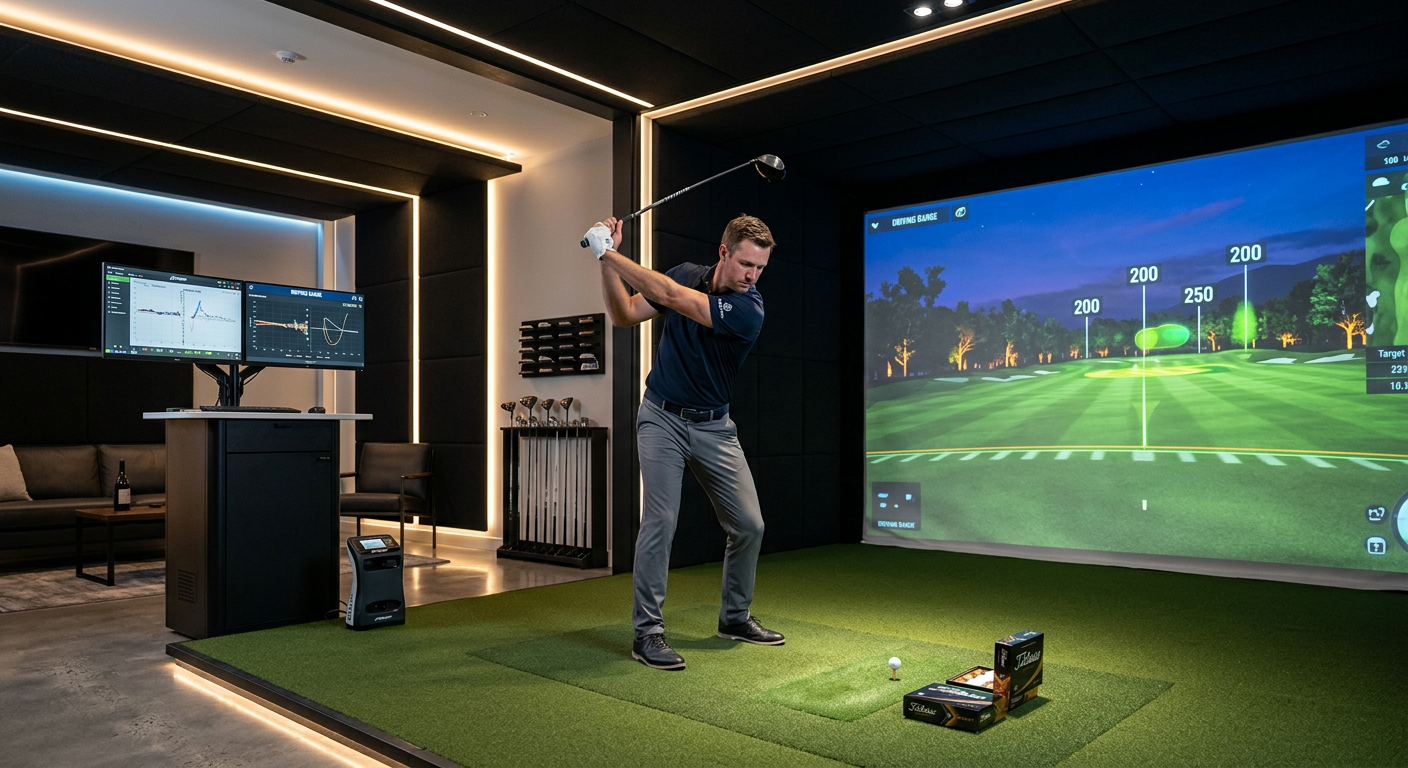
The Reality of Building Your Own Golf Simulator
Is it possible to build a do it yourself golf simulator in your garage or spare room? The short answer is yes, but the path from a box of parts to a functional, accurate practice space is often more expensive and complex than most golfers anticipate. For many players in Forney and the surrounding Kaufman County area, the dream of having 24/7 access to the game is what drives the DIY spirit. However, understanding the spatial requirements, equipment costs, and technical hurdles is essential before you clear out the cars or the guest bedroom.
Building a simulator requires a balance of three main factors: space, technology, and safety. While entry-level setups can be pieced together for a few thousand dollars, achieving professional-grade accuracy—the kind used by PGA Tour pros—often requires an investment that rivals the cost of a luxury vehicle.
Necessary Space and Dimensions for a DIY Setup
Before purchasing a single piece of turf, you must measure your intended space. One of the most common mistakes in a do it yourself golf simulator project is underestimating the "swing zone." It is not just about the height of the ceiling; it is about the depth required for the sensors to track the ball and the width needed to prevent "simulator shanks" from damaging your walls.
According to technical guides on how to build your own golf simulator, a safe and functional environment typically requires a minimum space of 10 feet high, 12 feet wide, and 15 feet deep. If you are a taller golfer or have a particularly wide swing arc, that height requirement may push toward 11 or 12 feet to ensure you don't clip the ceiling with your driver.
Beyond the swing itself, you need depth for the ball flight. Most launch monitors require a specific distance between the ball and the impact screen (typically 8–10 feet) and another 2–5 feet of space behind the screen to allow for "bunching" and displacement upon impact. Without this buffer, the ball can rebound off the wall behind the screen, creating a significant safety hazard.
Breaking Down the Essential Components
A functional DIY setup is more than just a net and a mat. To turn it into a true simulator, you need a cohesive system of hardware and software.
The Launch Monitor: The Brain of the System
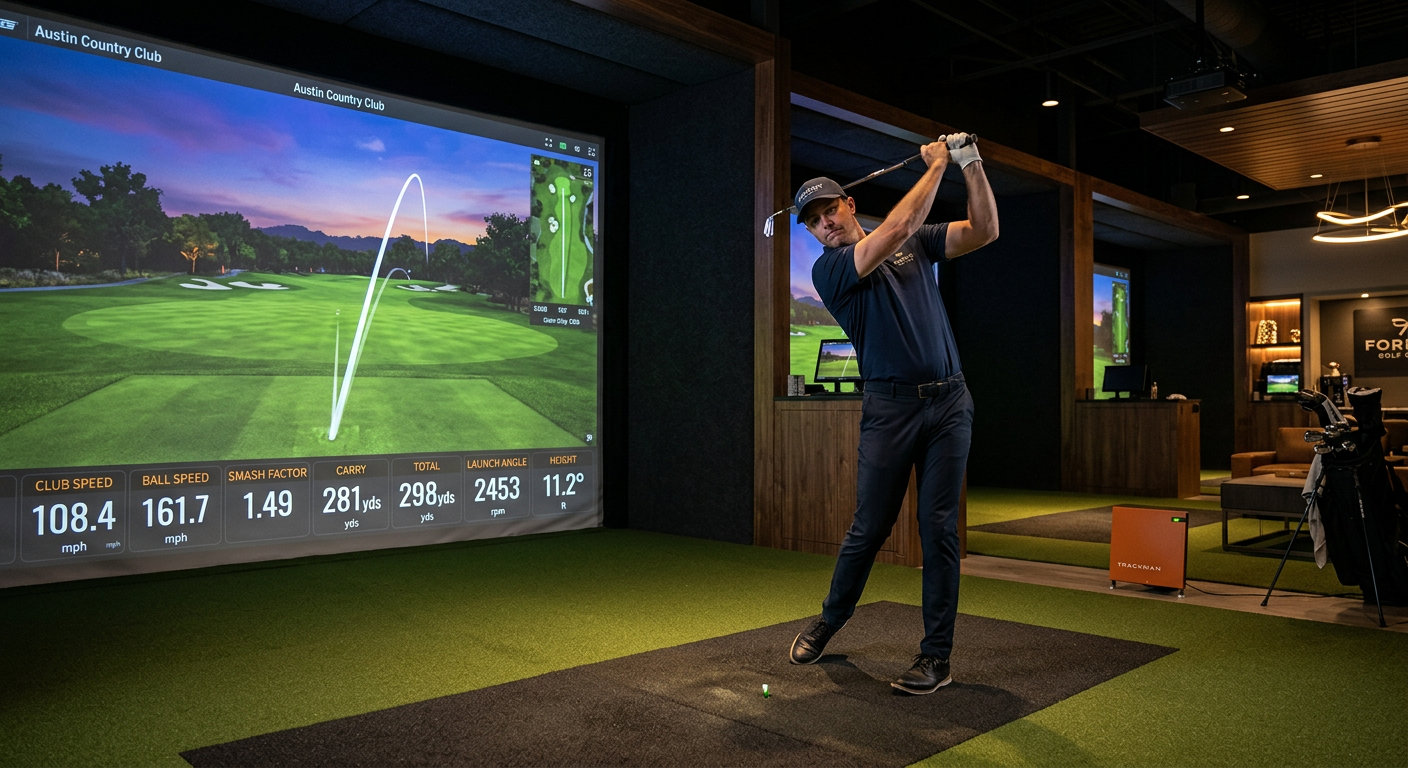
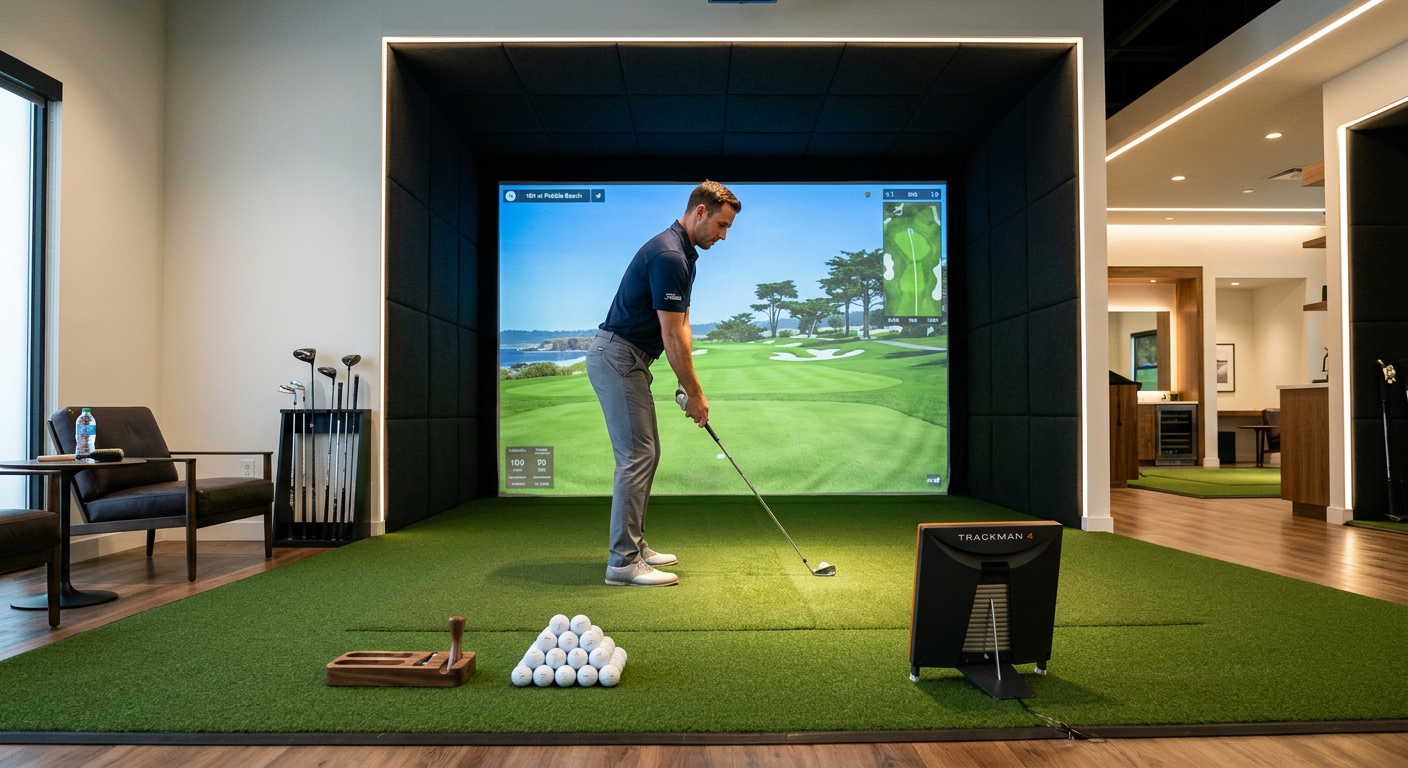
This is where most of your budget will go. Entry-level launch monitors, which often cost between $600 and $2,000, provide basic data like carry distance and ball speed. However, for golfers who are serious about game improvement, these units sometimes lack the precision needed for high-level training. On the other end of the spectrum are professional-grade units like the TrackMan 4, which cost upwards of $20,000 but offer industry-leading data on club path, face angle, and spin rate. If you are curious about why professionals rely on this level of tech, you can read more about how accurate are golf simulators to see how data translates to real-world performance.
The Impact Screen and Projector
Unlike a standard bedsheet or a cheap driving net, an impact screen must be durable enough to withstand ball speeds exceeding 150 mph while remaining flat enough to display a clear image. High-definition projectors are also necessary to ensure the image remains bright even if there is ambient light in the room. Golf Digest notes that matching your projector's aspect ratio to your screen's dimensions is one of the most frustrating technical hurdles for DIYers.
Hitting Mats and Turf
Do not skimp on the mat. Inexpensive mats are often too thin, leading to "fat" shots that vibrate through your joints and can cause long-term wrist or elbow injuries. A high-quality hitting mat mimics the feel of real turf and allows you to hit down on the ball without the jarring impact of a hard floor.
Common Challenges for the DIY Enthusiast
Even with the right equipment, the assembly process can be daunting. Many Forney residents who start a DIY project encounter two main obstacles: lighting and rebound.
Lighting interference is a frequent issue with optical-based launch monitors. If your garage has bright fluorescent lights or too much sunlight, the sensors may fail to "see" the ball correctly. On the flip side, radar-based units can be sensitive to metal objects in the room, such as refrigerators or heavy-duty shelving, which can cause signal interference.
Safety is the other major concern. The USGA provides insights regarding the importance of clearance and impact standards. If your screen is tensioned too tightly, the ball will "trampoline" back at the golfer. If it is too loose, the image quality degrades, and the ball may hit the wall behind the screen. Finding that "Goldilocks" zone requires trial and error that many homeowners find exhausting.
Is DIY Right for You or is There a Better Way?
When you calculate the total cost—including the launch monitor, specialized PC, projector, enclosure, mat, and software subscriptions—a high-quality do it yourself golf simulator often exceeds $10,000 to $15,000. For many, this is a significant investment for a setup that might still have technical "glitches" or space constraints.
If you are looking for a detailed breakdown of these tiers, our guide on how much is a golf simulator explains the difference between budget builds and professional installations.
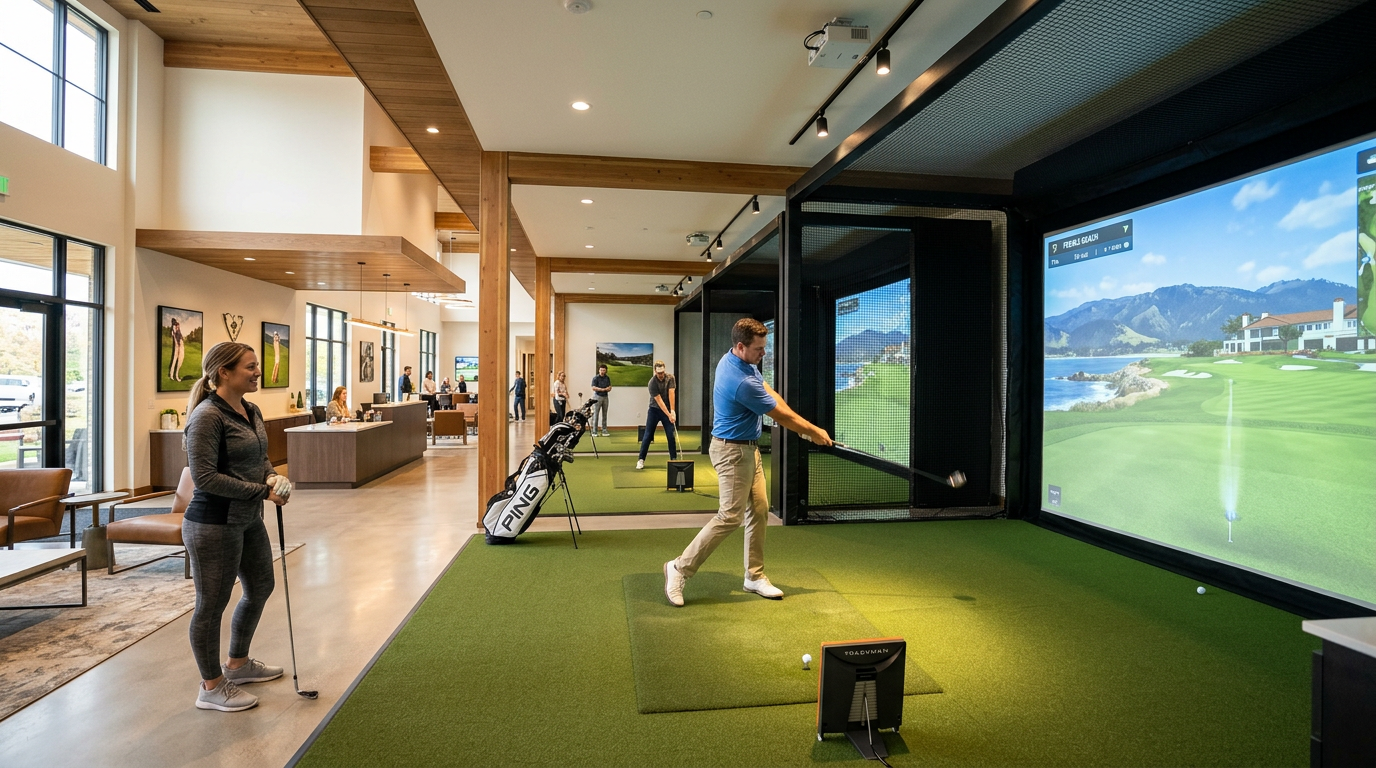
For golfers in the Forney area who want the TrackMan experience without the massive upfront cost or the headache of home maintenance, The Wedge offers a premium alternative. Located conveniently for local residents, we provide the highest tier of simulator technology in a climate-controlled environment designed specifically for serious practice. You get all the benefits of a $25,000 home setup for a fraction of the cost through our membership options.
Frequently Asked Questions
Can I build a golf simulator for under $1,000?
While you can buy a net, a basic mat, and a budget launch monitor for under $1,000, it will not be a full "simulator" experience with a projected screen and high-accuracy data. True simulation requires a projector and more robust software, which typically starts around the $3,000 mark.
Does a home simulator help your game?
Yes, provided the data is accurate. Practicing on a simulator allows for high-repetition training regardless of the weather. However, if the sensors are inaccurate, you may inadvertently develop bad habits to "trick" the machine into showing a straight shot.
How much height do I really need?
A 10-foot ceiling is the standard recommendation. While some shorter golfers can get away with 9 feet, you run a high risk of hitting the ceiling with your driver or woods during the follow-through.
Experience the Best Technology in Forney
If you are tired of researching projectors and measuring your garage, why not skip the setup and start swinging? The Wedge in Forney, TX, is the premier destination for golfers who want to train like the pros. We feature professional-grade TrackMan 4 technology, premium hitting surfaces, and a community of local golfers dedicated to improving their game.
Whether you want to work on your swing path or just get some reps in after work, we provide the ultimate training programs and faculty to help you reach your goals. Visit us today and see why the best simulator setup isn't in your garage—it's at The Wedge. For more information, feel free to contact us or stop by our facility.