
Hero background

    Are Golf Simulators Accurate? The Truth About Indoor Training Data

    Discover the science behind golf simulator accuracy and why professional-grade technology like TrackMan is trusted by PGA Tour pros. Learn how these systems provide precise data to help you improve your game in any weather.

    Back to Blog
    Technology

    The short answer to whether golf simulators are accurate is a resounding yes—provided you are using professional-grade technology. In the modern era of golf instruction, the gap between the driving range and the indoor bay has effectively closed. High-end systems can track ball flight to within a few inches of reality, making them reliable enough for the best players in the world to trust with their livelihoods.

    At the heart of this accuracy is the hardware used to capture the data. Most golfers questioning the reliability of an indoor session have likely experienced low-tier consumer monitors that rely on basic infrared sensors. However, when you step into a facility like The Wedge, you are using the same technology seen on the Sunday broadcasts of the PGA Tour.

    Understanding the Technology Behind the Data

    To understand why a simulator is accurate, you have to look at how it "sees" the golf ball. There are two primary types of technology used in the industry: Photometric (camera-based) and Doppler Radar.

    Photometric systems, such as Foresight or SkyTrak, use high-speed cameras to take a burst of images of the ball at impact. These systems excel in small spaces because they only need to see the first few inches of flight to calculate spin, launch angle, and ball speed. While highly effective, they rely on algorithms to predict where the ball will land.

    Doppler Radar, which is the foundation of TrackMan Technology Explained, works differently. It emits microwave personal radiation that reflects off the moving club and ball. This allows the system to track the entire trajectory of the shot from impact to landing. Because it measures the actual flight rather than just predicting it, radar is often considered the gold standard for outdoor-to-indoor consistency.

    Why Professional Golfers Trust the Data

    If you follow professional golf, you will notice a orange box sitting behind almost every player on the range. This isn't for show; it is because the data is precise enough to dictate their equipment changes and swing adjustments. According to the Who Uses TrackMan? PGA Tour Player List, over 1,000 tour professionals own these units because the margin for error is incredibly slim.

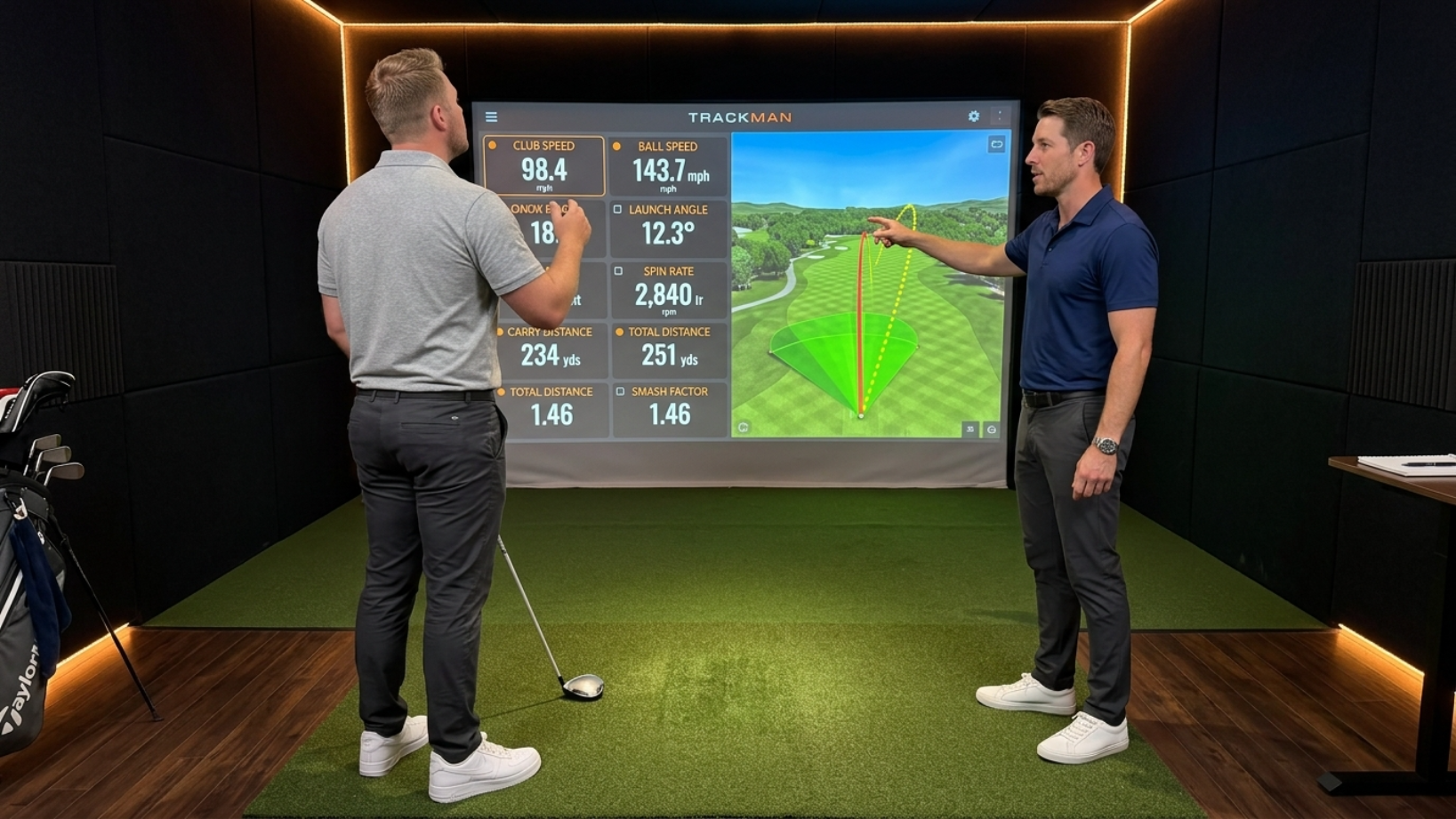
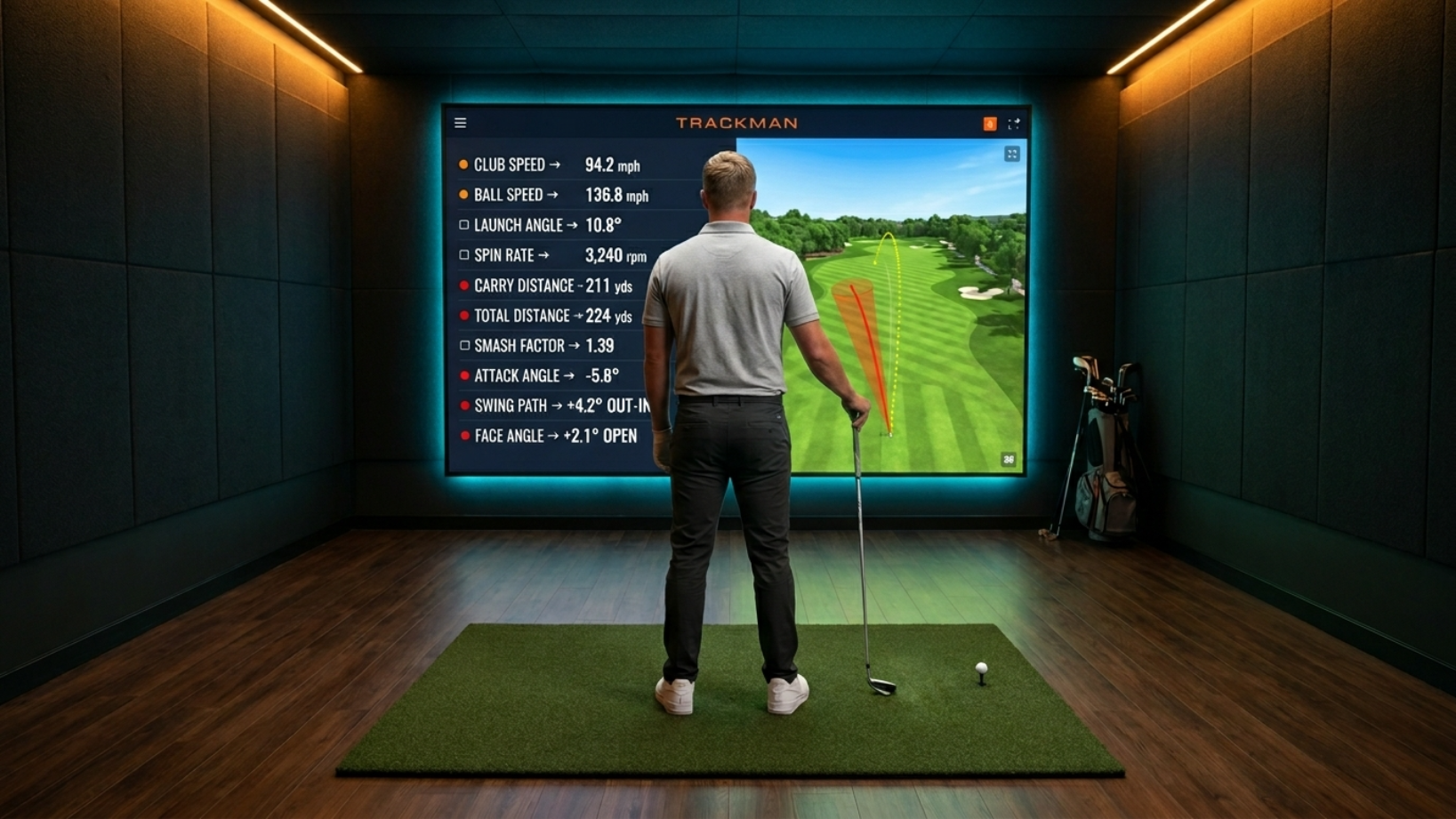
    For a standard 100-yard shot, a high-end radar unit is accurate to within one foot of the actual landing spot. Furthermore, it can measure the club face angle at impact to within 0.1 degrees. For a golfer in Forney looking to shave strokes off their handicap, this level of precision is far superior to "eyeballing" ball flight at a traditional outdoor range where wind and poor-quality range balls can mask the reality of your swing.

    The Indoor Swing Syndrome and Perception vs Reality

    Sometimes, a golfer might feel that a simulator is "wrong" because their distances don't match what they see on the course. In many cases, the technology is perfectly accurate, but the golfer is experiencing what is known as Indoor Swing Syndrome. This occurs when a player subconsciously changes their swing because they are in an enclosed space or standing on a synthetic mat.

    Because the sensors remain constant, the data doesn't lie. If the screen says you hit a 150-yard 7-iron when you "usually" hit it 165, it is likely that the indoor environment or the mat is providing a more honest look at your strike quality. At our facility, we help players bridge this gap through our specialized training programs, ensuring that the gains you make indoors translate directly to the local fairways in Kaufman County.

    Environmental Factors and Normalization

    One of the greatest advantages of using a simulator at a professional facility is the ability to account for environmental variables. On a humid, windy day in North Texas, your ball will behave differently than it does on a dry, cool morning.

    Top-tier software allows us to "normalize" the data. This means the computer calculates what your shot would have done in a vacuum or at sea level. This removes the "noise" of Texas weather, allowing you to focus on your pure yardages. This scientific approach is why organizations like the USGA: Understanding Simulator Accuracy for Handicaps recognize the value of indoor data for game improvement and consistent scoring.

    Why Proper Setup Matters for Accuracy

    Accuracy isn't just about the box on the ground; it’s about the environment. For a simulator to give you tour-level data, several factors must be calibrated:

    Level Surface: The unit must be perfectly level with the hitting mat to ensure launch angles are measured correctly.

    Target Alignment: If the unit isn't aligned to the center of the screen, your "pushes" and "pulls" will be skewed.

    Lighting conditions: While radar is less affected by light, camera-based systems require specific lighting to capture spin high-speed images correctly.

    Ball Quality: Using premium balls (like the ones you play on the course) ensures the radar captures the correct spin rate, which is often distorted by cheap, one-piece range balls.

    At The Wedge, we eliminate these variables by providing a professionally calibrated environment. You can learn more about our commitment to precision on our about us page.

    Golf Simulator Accuracy FAQ

    Can a golf simulator really detect a slice or a hook?

    Yes. By measuring the relationship between your club path and the face angle at impact, high-end simulators can accurately depict side spin and axis tilt, which determine if a ball curves left or right.

    Are simulators more accurate than a driving range?

    In many ways, yes. Most driving ranges use "limited flight" balls that don't travel as far as premium balls. A simulator tracks the ball you actually play with, providing more "real world" yardages. You can compare the differences in our guide on what is a golf driving range.

    Does the mat affect my distance?

    Synthetic mats can sometimes hide "fat" shots because the club slides into the ball rather than digging into the dirt. However, sophisticated launch monitors can still detect the loss in ball speed and vertical launch associated with a poor strike.

    Why do my distances seem shorter indoors?

    This is often due to the "normalization" of data (removing wind and roll) or a subconscious floor-to-ceiling restriction in the golfer's swing. The technology itself is rarely the cause of shorter distances.

    Precision Training in Forney

    Whether you are a scratch golfer or just starting your journey, the data provided by a professional simulator is the fastest way to improve. By removing the guesswork and providing instant, undeniable feedback, you can make adjustments in real-time that would take months to figure out on a traditional grass range.

    If you are looking for a place to dial in your numbers with the most accurate technology in the industry, we invite you to visit us. Our membership options provide local golfers with year-round access to the same tools used by the pros.

    Experience the precision of TrackMan today. Visit The Wedge in Forney to start your journey toward a more accurate game.

    Related Posts

    What is a Golf Driving Range? Everything You Need to Know

    What is a Golf Driving Range? Everything You Need to Know

    How Much Is a Golf Simulator? A Detailed Breakdown of Costs and Tiers

    How Much Is a Golf Simulator? A Detailed Breakdown of Costs and Tiers

    What is a Driving Range? Everything You Need to Know to ImproveYour Game

    What is a Driving Range? Everything You Need to Know to ImproveYour Game